FMB InsiderThe Public Record

Island History — the good, the bad, and the ugly

Two thousand years on Estero Island

Shell-mound builders and Cracker cowmen. U-boats prowling just offshore. A shrimping boom called “pink gold.” A land rush, a string of hurricanes, and a town that fought to save its own character. Fort Myers Beach has a deep, strange, and genuinely great story — and it did not begin in 2022. Here it is, the whole truth, with sources.

Prefer the legends — pirates, buried treasure, rum-runners? Those live on our Tall Tales page, clearly labeled as stories told but not proven.
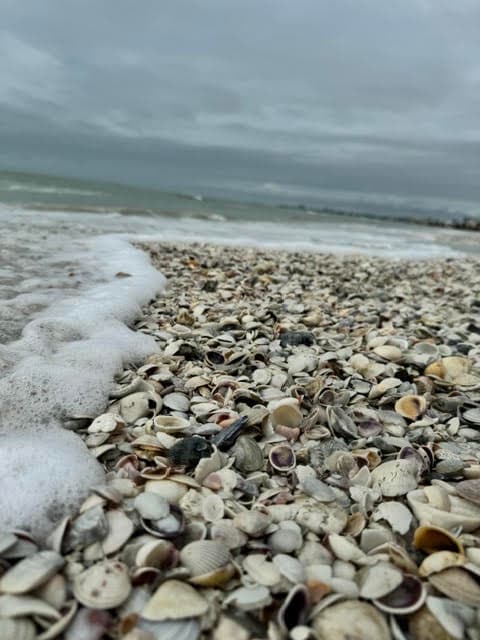
Shells and sea foam at the water's edge on Fort Myers Beach
The shell line on Estero Island's shore. The Calusa built this island's highest ground out of shells like these more than two thousand years ago — the same beach, the same material, a hundred generations apart.
📷 Historic Estero Island / early Fort Myers BeachSuggested source: Florida Memory (State Archives, public domain) or Estero Island Historic Society (with permission)

Pre-1500s

The Calusa and the shell mounds

Long before it had a name in English, Estero Island belonged to the Calusa, who built shell mounds along its bayside more than 2,000 years ago. The Calusa dominated southwest Florida as “fisher-gatherers” sustained by the estuary's extraordinary richness. The highest point on the island today — the Mound House site at the end of Connecticut Street — sits on one of their mounds.

1513–1521

First European contact

Spanish explorer Ponce de León reached this coast in 1513. When he returned in 1521 to attempt colonization, he was mortally wounded by the Calusa — who resisted European settlement here far longer than most of Florida's peoples.

1600s–1800s

Cuban fishing ranchos

For generations, Cuban fishermen worked seasonal fishing villages — ranchos — across southwest Florida, including Estero Island, drying and salting the catch for the Havana market. Florida became the 27th state in 1845; the Homestead Act of 1862 would eventually open the island to settlement.

1850s–1870s

Cattle boats to Cuba

Just across the water at Punta Rassa, cattle became king. Jacob Summerlin and other “Cracker cowmen” drove herds down the Florida peninsula to be shipped to Cuba — an estimated 1.5 million head between 1868 and 1878. The cowboys earned the name “Crackers” from the sound of their 12-to-14-foot braided whips. Spanish gold coins paid for those cattle, and that Gulf-coast cattle economy is the backdrop against which Estero Island's own settlement began.

1895–1914

Homesteaders and the first cottages

In 1895, Robert Gilbert received a homestead grant that included the Calusa mound at Connecticut Street. By 1911, William Case was living on the property and had started the island's first subdivision and cottage-rental business — the seed of Fort Myers Beach as a visitor destination. By 1914 the island was homesteaded, though life still revolved around fishing.

1921–1926

The bridge, the boom, and the storms

Everything changed in 1921, when a wooden toll bridge first connected “Crescent Beach” to the mainland — one car at a time, 50 cents per car plus 15 cents a passenger. Casinos, hotels, a pier, and the island's first canal followed fast. On busy days, 200 cars brought over a thousand visitors to drive and park on the sand. The developer Thomas Phillips, a wealthy Maryland inventor, built that first bridge and launched his San Carlos on the Gulf development. Then the hurricanes of 1921 and 1926 arrived, ending the boom and reminding everyone what a barrier island is.

1942

U-boats off the beach

World War II came closer to Estero Island than most people realize. In 1942, German U-boats hunted the Gulf of Mexico and sank 56 ships in these waters — including vessels torpedoed off Fort Myers and Marco Island. The government imposed nighttime blackouts and curfews on coastal communities, and civilian boats and aircraft joined the anti-submarine patrols. Islanders really did darken their windows against a war that was raging just offshore.

1940s–1950s

“Pink gold” and Old Florida

The discovery of shrimp beds offshore — “pink gold”— built a working waterfront and everything around it. The island's population grew 50% between 1940 and 1950. Churches, civic clubs, a local newspaper, Coast Guard and weather stations, and the annual Shrimp Festival all took root. In 1955, the Beach Library opened as the first free public library in Lee County — one room, one librarian. This is the era of motels, cottages, and Old Florida character the island is still loved for.

1960s–1994

Tourism, high-rises, and a growing tension

Postwar tourism turned the beach into a Gulf-coast destination, and the permanent population peaked — the 1990 census counted 9,284 residents (more than today). As Lee County began approving high-rise development on the island, many residents grew alarmed that the small-town, low-rise character was slipping away.

1995

The island becomes a town

That tension produced a town. On December 31, 1995, residents voted to incorporate as the Town of Fort Myers Beach, largely to control development and preserve the island's character. One of the new town's first acts was to save the Mound House from demolition — buying the Calusa mound site and turning it into the cultural and environmental center it is today.

2022

Hurricane Ian

On September 28, 2022, Hurricane Ian came ashore as a Category 4 storm and devastated the island — homes, businesses, Times Square, and nearly all infrastructure. It was the hardest blow in the island's modern history. But as a century of this timeline shows, storms have shaped Estero Island since the Calusa — and the island has always come back changed, not erased.

2022–today

The next Fort Myers Beach

What's being built now goes up under modern flood and wind codes — a structurally different island than the one Ian hit. You can watch that rebuild in real time on our permit tracker, and read where it stands in The Comeback. History here isn't a museum piece — it's being written this year.

Sources

Every factual claim on this page traces to the sources above. Spot an error or have a family story or photo to add? Tell us — this page grows with the community's help.